

Call us for an appointment
(65) 6836 1480

Consultant Dermatologist
MBBS (Singapore), M.Med (Internal Medicine),
MRCP (UK), FAMS (Dermatology),
Corr. Fellow, American Society for Dermatologic Surgery
Eczema can become an ongoing problem when symptoms persist, return frequently or become increasingly difficult to keep under control. Repeated itching, dryness and inflammation can affect day-to-day comfort, while frequent flares can make short-term treatment alone insufficient.
Managing chronic eczema involves looking at the condition over time rather than focusing only on the symptoms present during a particular flare. A dermatologist can assess the pattern and severity of the eczema, review possible factors contributing to poor control and consider how well the current treatment is working.
The aim is to develop an approach that addresses active symptoms while also supporting better control between flares.
A dermatology assessment can help establish what has changed and which features of the eczema are most relevant to its ongoing management.
A dermatologist may ask how long the eczema has been present and how frequently symptoms return. They will also review how the skin has responded to previous treatment, particularly if an approach that once worked is no longer providing the same level of control.
This history can help establish how well the eczema has been controlled over time and whether the current management approach still meets the patient’s needs.
A dermatologist will assess how much skin is affected and how symptoms are interfering with everyday life or sleep. These factors help establish how burdensome the eczema currently is and provide a basis for monitoring changes over time.
Rather than assuming every possible trigger needs to be avoided, a dermatologist may look for exposures that appear to have a meaningful connection with the patient’s flare-ups. This can include products used on the skin or substances encountered regularly at work or at home.
Chronic eczema management can change between an active flare and periods when symptoms are more settled. Eczema treatment during a flare is usually aimed at controlling inflammation, while care between flares focuses more on maintaining the skin barrier and reducing recurrence.
When eczema is active, a dermatologist considers how inflamed the skin is and where the affected areas are located before deciding on treatment. The approach used on thicker skin, for example, may not be appropriate for more delicate areas such as the face or around the eyes.
This means treatment may differ across parts of the body rather than relying on the same product or strength everywhere. The plan can also be adjusted according to how severe the flare is and how the skin responds.
Once a flare has settled, daily skin care continues to play an important role. Regular moisturising can help support the skin barrier, which may remain vulnerable even when redness and itching have improved.
If dryness or irritation persists, the dermatologist can also review the products being used and how the skin is being cleansed. The aim is to keep the routine manageable and suitable for continued use rather than adding unnecessary products.
When eczema remains difficult to control despite an appropriate management routine, a dermatologist may reassess the condition before changing or stepping up treatment. This can help identify another condition or complication that could be contributing to the ongoing symptoms.
Eczema that behaves differently from expected or does not improve with treatment may need to be reassessed. A dermatologist may consider whether another skin condition is contributing to the symptoms or whether something coming into contact with the skin is causing additional irritation.
For example, allergic contact dermatitis can sometimes occur alongside eczema and make it harder to control. Where this is suspected, further investigation such as patch testing may be considered rather than repeatedly treating the skin in the same way.
Repeated scratching and disruption of the skin barrier can make affected skin more vulnerable to infection. A dermatologist may look for changes such as increasing pain, oozing or crusting that suggest the flare is no longer due to inflammation alone.
Certain complications require more urgent assessment. Eczema herpeticum, for example, is a viral infection that can spread quickly and requires prompt medical treatment.
If the diagnosis has been reviewed and eczema remains inadequately controlled, a dermatologist may consider whether a different level of treatment is appropriate.
Options beyond topical treatment may include phototherapy or treatments that act more broadly on the immune response.
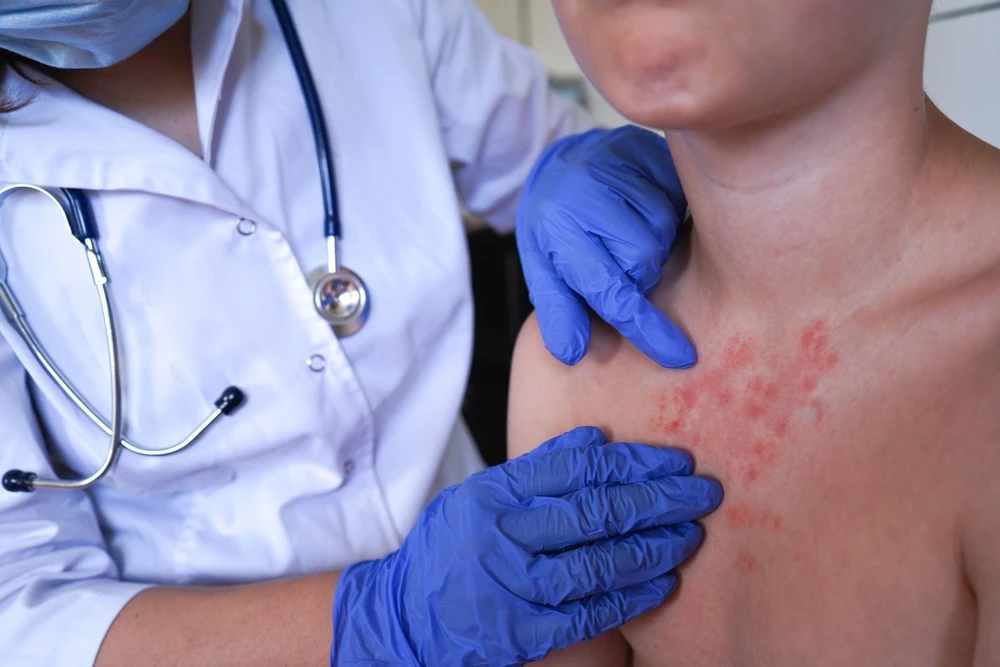
Chronic eczema management is an ongoing process of controlling active inflammation, supporting the skin between flares and reassessing treatment when symptoms remain difficult to manage. A dermatologist can monitor how the condition responds over time and adjust treatment when the existing approach is no longer providing adequate control.
At LL Cheong Skin and Laser Clinic, Consultant Dermatologist Dr Cheong Lai Leng provides care for patients with chronic eczema. Drawing on her clinical experience, she considers the severity and impact of each patient’s eczema when recommending a suitable course of management.
If eczema continues to affect your skin or daily life despite ongoing care, book an appointment with Dr Cheong to discuss your symptoms and treatment options.
Chronic eczema can often be controlled, but symptoms can recur even after the skin has improved. Treatment therefore focuses on managing active symptoms, supporting the skin barrier and reducing the frequency and severity of future flares.
It can. Areas affected by repeated inflammation or scratching may remain darker or lighter than the surrounding skin for some time, while the skin may also become thicker if it has been repeatedly rubbed or scratched. These changes can persist even after the active inflammation has improved.
Some people notice that their eczema behaves differently when the weather changes or when they move between different climates. Heat, humidity, dry air and changes in daily routines may all affect how the skin feels, although the pattern varies from person to person.

Dr Cheong Lai Leng
Consultant Dermatologist
MBBS (Singapore), M.Med (Internal Medicine),
Dr Cheong Lai Leng is a consultant dermatologist with over 20 years of clinical experience.
Her specialist
interests include the surgical management of skin conditions and cosmetic dermatology. Her
practice
incorporates laser therapy, skin-resurfacing procedures, photorejuvenation, chemical peels
and injectables as
part of comprehensive, individualised skin treatment plans.
With her extensive expertise and patient-centric approach, Dr Cheong is well-equipped to diagnose and treat patients with various individual skin types and concerns.

