

Call us for an appointment
(65) 6836 1480

Consultant Dermatologist
MBBS (Singapore), M.Med (Internal Medicine),
MRCP (UK), FAMS (Dermatology),
Corr. Fellow, American Society for Dermatologic Surgery
Acne is a type of inflammatory skin condition that causes pimples and pustules in areas where there are many oil
(sebaceous) glands, mainly on the face, chest and back. It can show up as congested pores, whiteheads,
blackheads and cysts.
Acne develops when oil, bacteria and dead skin cells clog the hair follicles, in turn causing inflamed pustules
that leave behind marks or acne scars.
Acne can present in several forms, ranging from mild clogged pores to deeper inflammatory lesions. Identifying the type of acne helps determine the most appropriate treatment approach.
Acne develops when several factors contribute to blockage and inflammation within the hair follicles. Common causes and triggers include:
You should consider seeing an acne dermatologist if you:
Early assessment can help identify the type and severity of your acne, allowing treatment to begin before permanent scarring or pigmentation develops.
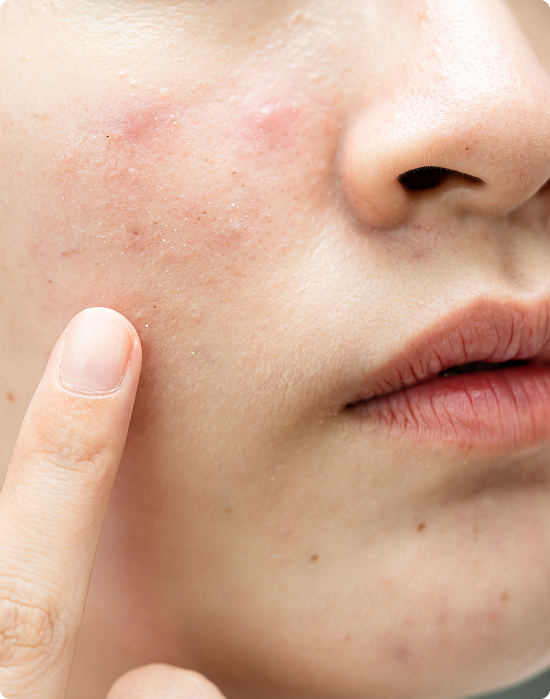
Your acne consultation often begins with a comprehensive assessment of your skin to determine the type and severity of your acne, along with any acne scars or post-inflammatory marks that may be present. As part of the session, your dermatologist will often review your medical history, previous treatments, skincare routine and potential triggers.
This consultation helps identify the most appropriate treatment options for both active acne and acne scars, allowing your care to be tailored to your individual skin concerns and long-term treatment goals.
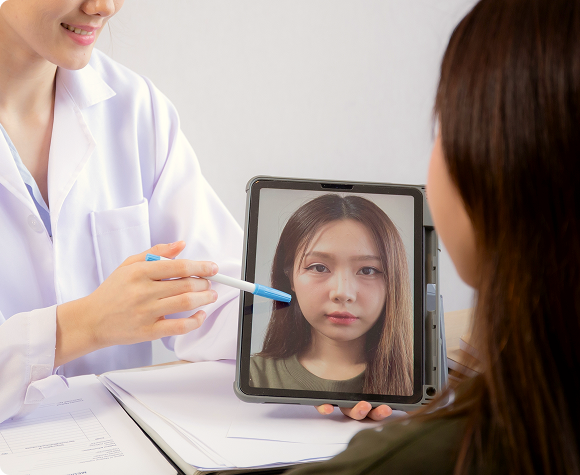
Acne treatment depends on the type of acne, its severity and the underlying factors contributing to breakouts. While mild acne may respond to good skincare and topical treatments, moderate to severe acne often requires prescription medication or in-clinic procedures.
Following a comprehensive skin assessment, our dermatologist will recommend a personalised treatment plan at our clinic, based on your skin condition and treatment goals.
Chemical peels use carefully selected acids to exfoliate the outer layer of the skin, removing damaged skin cells and promoting the growth of healthier skin. This treatment helps unclog pores, reduce active acne and improve overall skin texture.
Laser resurfacing uses focused laser energy to target damaged skin while stimulating collagen production and skin renewal. It can help improve active acne as well as reduce the appearance of acne scars by encouraging the growth of new, healthier skin.
Dermabrasion is a skin resurfacing procedure that uses a specialised rotating instrument to remove the outermost layer of damaged skin. By promoting collagen and elastin production, it can improve skin texture and may be beneficial for mild acne and comedonal acne.
IPL therapy uses multiple wavelengths of light to target acne-causing bacteria, pigmentation and other skin concerns. It also stimulates collagen production and skin renewal, helping to improve both active acne and the appearance of post-acne marks.
Many of these treatments not only help control active acne but can also improve post-acne marks and reduce the appearance of acne scars, depending on the severity of the condition.
Even after active acne has cleared, it may leave behind permanent scars that can affect the skin's texture and appearance. Acne scar treatment focuses on improving these scars by stimulating collagen production, releasing scar tissue or restoring lost volume. As different types of acne scars respond to different treatments, a personalised treatment plan is often recommended to achieve the best possible outcome.
Laser resurfacing stimulates collagen production while improving skin texture and reducing the appearance of acne scars. It is commonly used to treat a range of atrophic (depressed) acne scars.
Dermal fillers may be used to lift selected depressed acne scars by restoring volume beneath the skin. Results are immediate, although repeat treatments may be required depending on the type of filler used.
Fractional laser treatment delivers controlled laser energy to targeted areas of the skin while leaving surrounding tissue intact. This promotes skin renewal, encourages collagen remodelling and improves the appearance of acne scars with reduced downtime.
Microneedling creates controlled micro-injuries within the skin to stimulate natural collagen production. This treatment can improve overall skin texture and reduce the appearance of mild to moderate acne scars over a series of sessions.
Subcision is a minor procedure that releases the fibrous bands beneath certain depressed acne scars. By freeing the scar from the underlying tissue, the skin can gradually lift and become smoother as new collagen develops.
Corticosteroid injections are commonly used to treat raised or hypertrophic acne scars by reducing inflammation and gradually flattening the scar tissue.
Whether you are struggling with persistent acne, acne scars or recurring breakouts, early treatment can help improve your skin and reduce the risk of long-term scarring. Schedule a consultation with our dermatologist for a comprehensive skin assessment and a personalised acne treatment plan tailored to your skin's needs.
MEET OUR SPECIALIST
Effective acne management requires an approach that addresses both active breakouts and their long-term effects. At LL Cheong Skin & Laser Clinic, we offer comprehensive acne and acne scar treatments, carefully tailored to your acne severity, scar type and treatment goals. Our range of advanced treatments includes chemical peels, laser resurfacing and IPL therapy to improve skin clarity and reduce the appearance of acne scars.
Your treatment is led by Consultant Dermatologist Dr Cheong Lai Leng, an experienced acne specialist who performs a comprehensive assessment to identify the underlying causes of your acne and evaluate any existing scarring before recommending the most appropriate treatment options.
If you are experiencing persistent acne, recurring breakouts or acne scarring, seek professional assessment early. Contact us today to begin a personalised treatment plan for clearer, healthier-looking skin.
The time required varies depending on the severity of your acne and the treatment used. While some treatments may show improvement within a few weeks, most acne treatment plans require several weeks to months of consistent treatment before significant results become noticeable.
Most true acne scars do not disappear on their own. While post-acne marks or pigmentation may gradually fade over time, depressed or raised acne scars usually require treatment to improve their appearance.
Acne scar treatments can significantly improve the appearance of scars, but complete removal is not always possible. The degree of improvement depends on the type, severity and extent of the scarring, as well as the treatment methods used.
Yes. In many cases, active acne can be managed while certain treatments are used to improve acne scars. However, some scar treatments may be recommended only after active acne is better controlled to achieve the best possible results.
Medical dermatology focuses on the diagnosis and treatment of conditions affecting the skin, hair and nails
Aesthetic dermatology focuses on helping patients address individual concerns
Surgical dermatology involves procedures to diagnose, remove or treat various skin conditions and growths
Consultant Dermatologist
MBBS (Singapore), M.Med (Internal Medicine),
MRCP (UK), FAMS (Dermatology),
Corr. Fellow, American Society for Dermatologic Surgery
Dr Cheong Lai Leng is a Consultant Dermatologist with over 20 years of clinical experience in diagnosing and treating acne, acne scars and other complex skin conditions. She provides personalised care for adolescents and adults, tailoring treatment plans according to acne severity, skin type and scar characteristics. Her practice offers a range of medical and procedural treatments, including chemical peels, laser resurfacing, IPL therapy and other skin rejuvenation techniques, to help manage active acne, improve acne scarring and support long-term skin health.

